


By Paul Lucky Okoku
The United States did not lose because they lacked courage. They lost because knockout football punishes hesitation, nervousness, and defensive lapses without mercy.
Belgium did not arrive in Seattle looking unbeatable. But on the night that mattered most, they peaked at the right time.
Seneca once said, “Luck is what happens when preparation meets opportunity.”
The United States had the opportunity.
Belgium had the preparation.
That was the story in Seattle.
Everything seemed ready for an American Cinderella night. Belgium had not looked dominant earlier in the tournament. Kevin De Bruyne started on the bench. Romelu Lukaku also began among the substitutes. Folarin Balogun had been cleared to play after one of the most controversial disciplinary decisions of the tournament.
The stage was set.
The crowd was ready.
The story was waiting to be written.
But football has a way of rejecting emotion when execution fails.
Belgium defeated the United States 4–1 in the Round of 16, with Charles De Ketelaere scoring twice, Hans Vanaken adding the third, and Lukaku coming off the bench to finish the match in stoppage time. Malik Tillman’s deflected free kick briefly gave America hope, but Belgium answered almost immediately.
This was supposed to be the night America announced itself.
Instead, it became the night Belgium reminded everyone why tournament experience still matters.
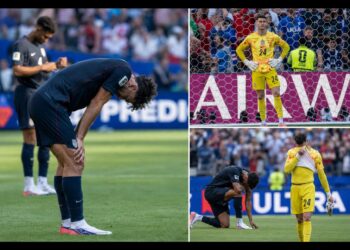
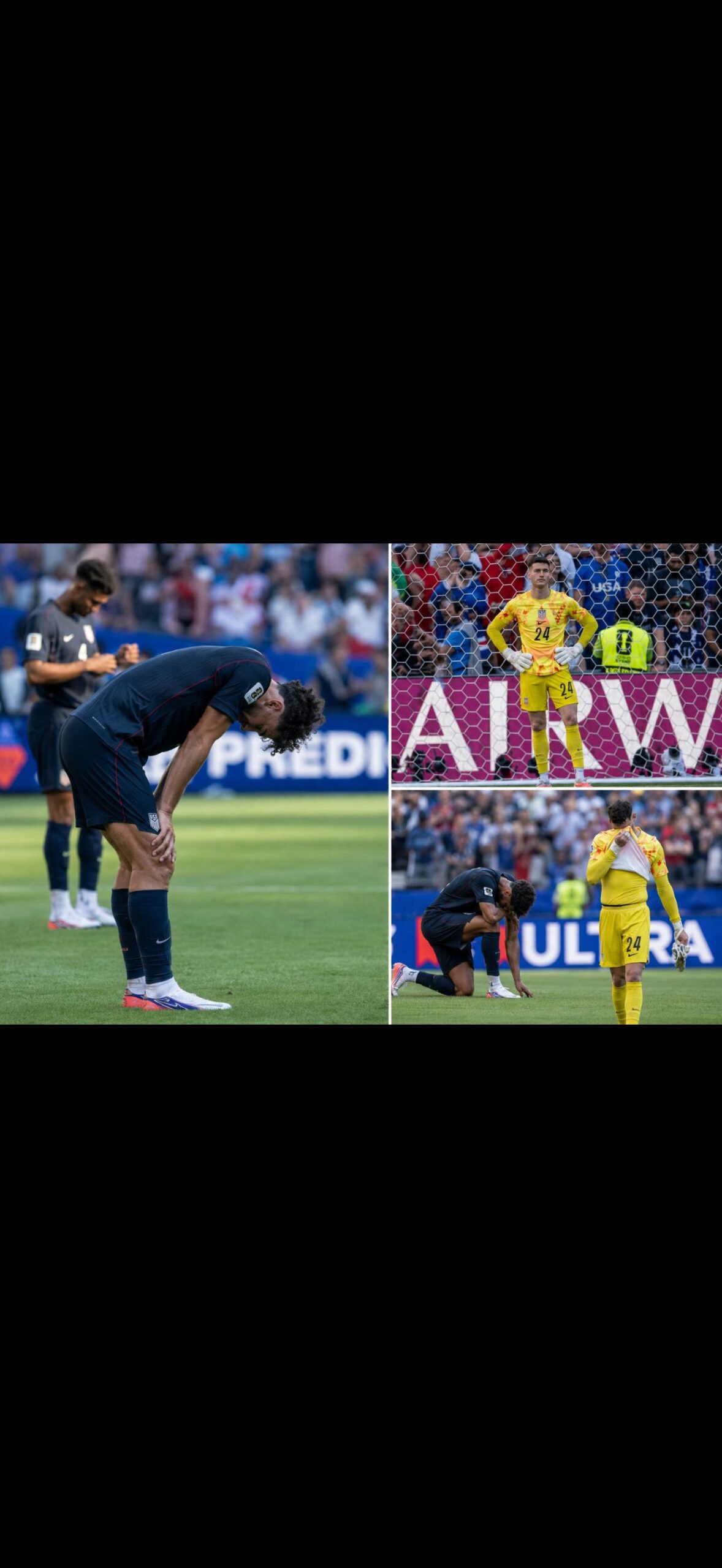
The United States showed flashes of greatness throughout this World Cup. They advanced. They competed. They gave their supporters belief. They made people dream.

But against Belgium, on the wrong night, they played their worst game of the tournament.
They looked nervous.
They looked anxious.
They rushed decisions.
They gave the ball away too cheaply.
They struggled to build rhythm.
And in knockout football, those small errors become big punishments.
Belgium Peaked When It Mattered Most
Belgium deserves full credit.
They had not been perfect before this match. They had survived Senegal 3–2 in the previous round, while the United States had beaten Bosnia and Herzegovina 2–0 to create genuine belief among American supporters.
But knockout football is not about how you looked yesterday.
It is about who you become today.
Belgium became sharper.
Belgium became calmer.
Belgium became clinical.
That is the danger of judging a great football nation by one previous performance. If you have played this game, or if you are a true student of it, you know that a team’s earlier struggle can create a false sense of comfort.
Every opponent can elevate.
Every knockout match resets the competition.
Belgium peaked at the right time.
The United States did not.
The Psychological Collapse
This was not simply a tactical defeat.
It was a psychological one.
The United States never removed their foot from the pedal. The problem was that they never found the smooth acceleration needed to control the match.
There were moments of energy.
There were moments of fight.
There were moments when the crowd could feel hope rising.
But there was no sustained rhythm.
Too many passes were forced. Too many touches were hurried. Too many decisions were made before the picture was clear.
That is what pressure does.
It makes the simple pass look complicated.
It makes the defender hesitate.
It makes the goalkeeper doubt.
It makes a team play faster than its own mind.
The Goals Told the Story
Belgium’s first goal came early through De Ketelaere in the ninth minute. That immediately changed the emotional temperature of the match.
The United States responded through Malik Tillman in the 31st minute, and for a brief moment, the Cinderella story came alive.
But great teams answer quickly.
Belgium did.
De Ketelaere scored again two minutes later. That was the turning point.
America had climbed back into the match, only to lose concentration almost immediately.
That is the kind of moment that separates teams in knockout football.
Not talent.
Not passion.
Concentration.
In the second half, Vanaken made it 3–1 after another costly American lapse, and Lukaku’s stoppage-time goal closed the door completely.
The Goalkeeper’s Hesitation
The third goal felt like the dagger.
Matt Freese had moments in this tournament where he looked confident and composed. But on Belgium’s third goal, hesitation entered the picture.
A goalkeeper does not always lose a match by making a bad save.
Sometimes he loses the moment by doubting whether to come, whether to stay, whether to attack the ball, or whether to wait.
That split second is everything.
Belgium recognized it.
Belgium punished it.
That is what experienced teams do.
Balogun’s Return Could Not Change the Match
Folarin Balogun’s availability added drama before kickoff. His suspension had been lifted after a controversial ruling, and Belgium had reportedly objected to the circumstances surrounding the decision.
That political and governance debate will continue.
But once the whistle blew, the match became about football.
Balogun’s return did not change the rhythm.
The United States needed composure behind him.
They needed cleaner possession.
They needed better defensive concentration.
They needed Belgium to feel pressure.
Instead, Belgium felt opportunity.
America Should Still Be Proud
This defeat hurts because belief had become real.
The United States did not enter this match as a team simply hoping to survive. They entered believing they could win.
That is progress.
They reached the Round of 16. They gave their country moments to celebrate. They showed splashes of greatness.
But greatness in flashes is not enough at this level.
Knockout football demands consistency.
It demands emotional discipline.
It demands that when the game becomes chaotic, the team becomes calmer.
Belgium had that calm.
America did not.
The Balogun Decision — When Football, Law, and Politics Collided
Justice must not only be done; it must also be seen to be done. — Lord Hewart
Few principles are more important to sport.
Football is built on trust.
Players trust the referee.
Supporters trust the competition.
Nations trust that every team competes under the same laws.
Once that trust is questioned, football faces a challenge far greater than a disputed goal.
Long before a ball was kicked between the United States and Belgium, the Round of 16 had already become one of the most debated matches of the 2026 FIFA World Cup.
The discussion was not about tactics.
It was not about formations.
It was not about whether Belgium’s experienced midfield could control possession or whether the United States could produce another upset.
Instead, the world’s attention turned to FIFA’s disciplinary process.
The controversy surrounding Folarin Balogun transformed a football match into an international governance debate.
Every World Cup produces memorable goals.
Some produce unforgettable controversies.
The Balogun case belongs to the second category.
After receiving a red card against Bosnia and Herzegovina, Balogun appeared set to serve the automatic one-match suspension required under FIFA’s disciplinary regulations.
Instead, FIFA suspended the implementation of that suspension for a one-year probationary period, making him immediately eligible for the knockout match against Belgium. The decision came after public reports that U.S. President Donald Trump had urged FIFA President Gianni Infantino to review the case, although Infantino denied personally influencing the judicial decision.
Whether one agrees with the outcome or not, the decision instantly shifted the conversation from football to governance.
Belgium’s Objection
Belgium’s football federation did not simply complain.
It formally challenged Balogun’s eligibility.
Its argument centered less on Balogun himself than on procedure.
Belgian officials said they were never provided the underlying disciplinary decision or an adequate explanation before FIFA treated their correspondence as an appeal and then declared it inadmissible because they lacked standing in the original proceedings.
To Belgium, the issue became one of transparency.
To FIFA, it became one of legal procedure.
Those are not always the same thing.
Law and Fairness Are Not Always the Same Conversation
One of football’s greatest challenges is balancing two legitimate principles.
The first is strict application of the written rules.
The second is judicial discretion.
FIFA relied on a provision within its disciplinary framework allowing implementation of a sanction to be suspended under certain circumstances, placing Balogun on probation rather than rescinding the red card itself.
Belgium argued that the decision conflicted with the long-standing expectation that a World Cup red card carries an automatic suspension.
Reasonable people can debate which interpretation is preferable.
What cannot be debated is that the decision created uncertainty.
And uncertainty is the enemy of confidence.
When Politics Enters the Conversation
Perhaps the most uncomfortable aspect of the controversy was not the disciplinary decision itself.
It was the perception that political influence had entered football.
Reports that President Trump had contacted FIFA President Gianni Infantino quickly became the dominant global headline, even as FIFA maintained that its judicial bodies acted independently.
Perception matters.
Even when institutions insist that proper procedures were followed, public confidence depends on the belief that every nation is treated equally.
Football has always sought to remain larger than politics.
That principle becomes harder to defend whenever political leaders appear connected to disciplinary outcomes.
The Bigger Question
Ironically, the controversy ultimately had little impact on the result.
Belgium defeated the United States 4–1 and advanced to the quarterfinals.
The scoreboard settled the sporting contest.
It did not settle the governance debate.
Instead, the match shifted attention toward larger questions.
How much discretion should sporting bodies exercise?
How transparent should disciplinary decisions be?
How should governing organizations communicate exceptional rulings?
Those questions will remain long after the final whistle.
The Lasting Lesson
Football has survived controversial refereeing decisions.
It has survived disputed penalties.
It has survived controversial World Cup draws.
It will survive this controversy as well.
But every major controversy presents an opportunity.
An opportunity to improve transparency.
An opportunity to improve communication.
An opportunity to strengthen confidence in institutions that govern the world’s most popular sport.
The strongest organizations are not those that avoid criticism.
They are those that explain difficult decisions clearly enough that even critics understand the reasoning.
Why Knockout Football Punishes Mental Mistakes
The Hidden Battle That Belgium Won Before the Final Whistle
“*We are what we repeatedly do. Excellence, then, is not an act but a habit.”* — Aristotle
Football’s greatest victories are rarely won by talent alone.
They are won by habits.
The habits of concentration.
The habits of discipline.
The habits of making the correct decision when everything around you is moving at extraordinary speed.
That was the hidden story behind Belgium’s victory over the United States.
Every football supporter remembers spectacular goals.
Fewer remember the quiet moments that produced them.
A rushed pass.
A missed defensive assignment.
One hesitation by a goalkeeper.
A player who switched off for two seconds.
Championship football often turns on moments that almost nobody notices until the replay.
The Belgium–United States match was full of those moments.
The final score read Belgium 4, United States 1.
Many will conclude that Belgium were simply the better team.
That would be only half the story.
Belgium were certainly efficient.
They deserved to advance.
But the deeper lesson was psychological.
The match demonstrated one of football’s oldest truths:
Final Reflection: When the Beautiful Game Refused to Forgive
There was no Cinderella ending in Seattle.
Not because America lacked heart.
Not because America lacked talent.
But because, on the biggest night of their tournament, they became just a little too anxious, just a little too hurried, and just a little too mistake-prone.
Belgium did what experienced teams do.
They waited.
They watched.
They punished.
And when the decisive moments arrived, they peaked at exactly the right time.
History will remember Belgium’s victory.
It will also remember the debate surrounding Folarin Balogun’s eligibility, reminding the football world that trust, transparency, and fairness remain as important off the pitch as performance is on it.
Beyond the controversy lies the enduring lesson.
America leaves this tournament with disappointment—but also with progress.
A nation that once celebrated qualification now expects to challenge football’s traditional powers.
That is growth.
Belgium’s victory was not built solely on superior talent.
It was built on composure, discipline, and flawless execution when the margins were at their smallest.
The Cinderella story was ready.
The pen was in hand.
But football wrote a different ending.
Because the beautiful game has always been at its most demanding when history is waiting to be made—and on nights like these, it rarely forgives even the smallest mistakes.
Paul Lucky Okoku, FIFA Legend, CAF Silver Medalist, Former Nigerian Super Eagles & Flying Eagles International, Former Olympic Qualifying Team Member, Football Analyst and Founder, GTCF writes from Atlanta, USA