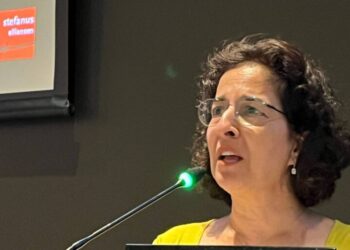



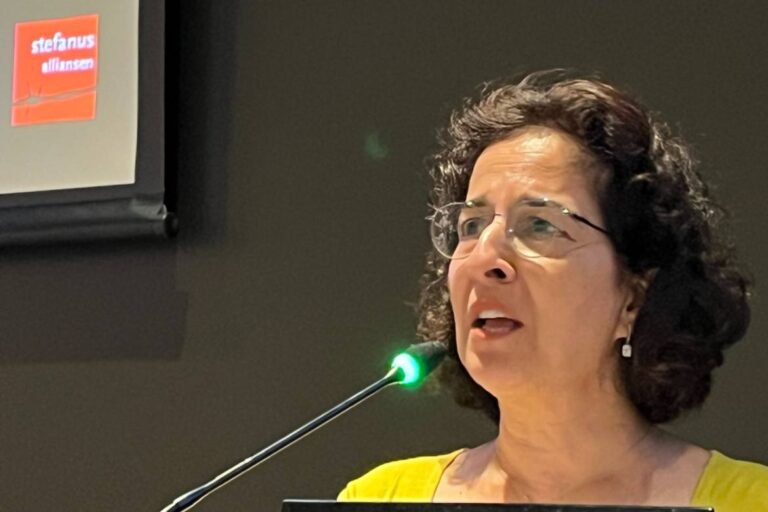
The United Nations (UN) special rapporteur on freedom of religion or belief, Nazila Ghanea, has said widespread insecurity, violence and impunity are undermining religious freedom in Nigeria.
Ghanea disclosed this in Abuja while presenting her preliminary observations at the end of an 11-day official visit to Nigeria.
The envoy of UN visited Nigeria from June 8 to June 19., meeting with government officials, security agencies, judicial officers, religious leaders, civil society groups, victims of violence and representatives of the diplomatic community.
According to the UN official, concerns over insecurity dominated virtually all discussions on freedom of religion or belief during the visit.
She stated that the violence, ranging from terrorism and banditry to kidnappings, land grabbing and attacks on communities, has spread across many parts of the country.
“Discussion of freedom of religion or belief in Nigeria elicits very acute concerns about insecurity, violence and conflict which has spread throughout the country and has generated huge alarm,” she said.
“These include terrorist actions, gang violence and banditry incursions, land grabbing to mass displacement, armed conflict and cattle rustling, hostage taking to arson attacks, destruction of holy places and schools, large scale kidnappings in remote areas and civil unrest around protests and strikes.”
The UN rapporteur noted that continuous attacks on schools and the abduction of children continue to violate the rights of many Nigerian children.
“What remains uncontested is that, at the village and hamlet levels in particular concentrations of the country, scores of innocent people experience killings, mass violence and the total decimation of their livelihoods, time and again, witnessing little or no justice,” she added.
Ghanea stated that many Nigerians still see the nation through the religious divide of a predominantly Muslim north and Christian south, sending out a warning that such narratives oversimplify the nation’s diversity.
“The existence of the religion field in such forms reinforces religion as a predominant organising principle of Nigerian society which, in turn, makes it highly susceptible to religion being ‘played’ for power, politics and wealth,” she said.