


By Paul Lucky Okoku
From a Hospitality Suite to a Historic World Cup Moment: Four Decades After My International Career Began, Football Opened Another Door and I Found Myself Honored as a FIFA Legend
When a community chooses to honor its sporting pioneers, it is not celebrating the past, it is investing in the future.
A late South African equalizer against Czechia. A historic all-female officiating crew. A FIFA Legends gathering. And a personal journey that came full circle after four decades.
The Badge That Means More Than Football
During the FIFA World Cup 2026 activities in Atlanta, I experienced something that caused me to pause and reflect.
It was not the match.
It was not the VIP access.
It was not even the opportunity to stand alongside fellow footballers from different parts of the world.
It was the realization that decades after our playing careers, FIFA still remembers.
That recognition matters.
In football, FIFA sits at the highest level of the game. Players may represent clubs, leagues, regions, youth national teams, Olympic teams, or senior national teams. Yet every footballer understands that FIFA represents the pinnacle of international football.
That is why the FIFA Legends designation carries special meaning.
It is bigger than a club.
It is bigger than a league.
It is bigger than an individual achievement.
It is global.
WHEN FOOTBALL REMEMBERS, FIFA RESPONDS
One aspect of this experience deserves special reflection.
The title FIFA Legend was not something we chose for ourselves.
It was not a nickname.
It was not a personal branding exercise.
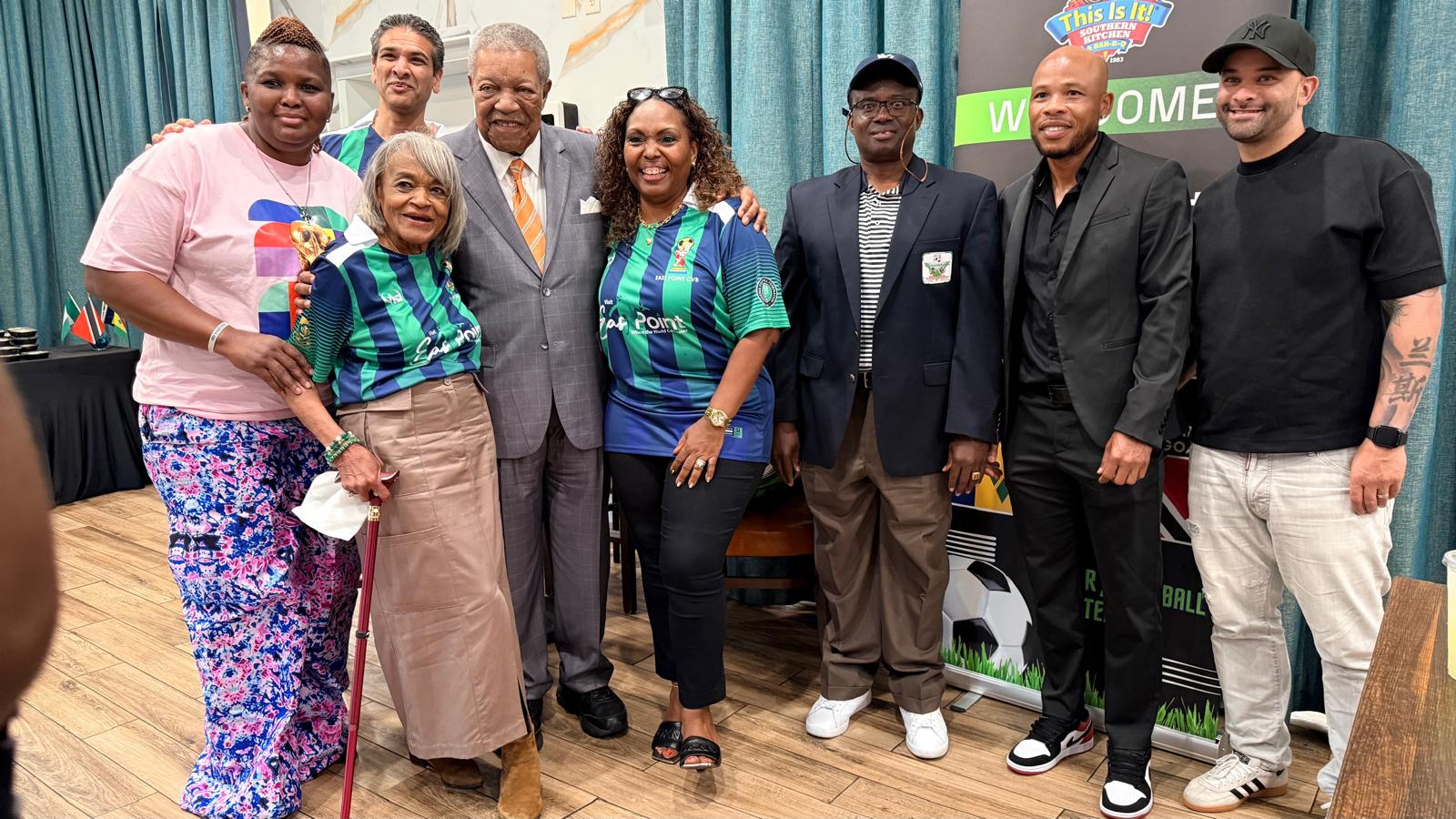
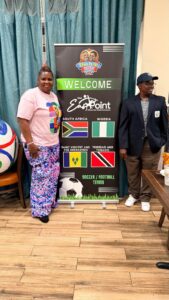
Throughout the *FIFA World Cup 2026* activities connected to *East Point’s hospitality and engagement program*, participants were consistently introduced, credentialed, recognized, and celebrated as FIFA Legends.
Everywhere we went, we heard the same words:
FIFA Legends.
At hotels.
At receptions.
At transportation pickups.
At hospitality events.
At media engagements.
For me, the significance was not the title itself.
The significance was the realization that more than four decades after my international career began, football still remembered.
And when football remembered, FIFA responded.
That last line is powerful because it becomes the takeaway:
Football remembered. FIFA responded.
East Point Did More Than Host an Event
The City of East Point, in the Greater Atlanta area of Georgia, deserves enormous credit.
This was not simply a hospitality exercise.
It was intentional.
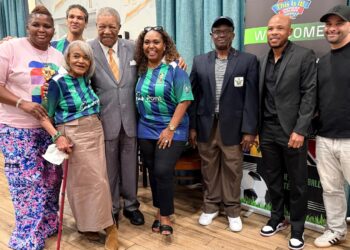
Under the leadership of Chantel Ross-Francois, President and CEO of the East Point Convention & Visitors Bureau, East Point brought together football legends, civic leaders, entrepreneurs, tourism officials, and community stakeholders in a celebration of football’s power to connect people.
Throughout the week, visiting FIFA Legends were provided hospitality, transportation, access to World Cup activities, media exposure, and opportunities to engage with local leaders and residents.
The professionalism was evident.
The passion was genuine.
The appreciation was sincere.
Most importantly, East Point demonstrated how a local community can leverage the world’s biggest sporting event to create meaningful connections that extend far beyond football.
A Distinguished International Gathering
The delegation reflected football’s international character.
Representatives included former players and football professionals connected to Nigeria, South Africa, Trinidad & Tobago, St. Vincent & the Grenadines, Jamaica, and the United States
Among those participating were former Trinidad & Tobago captain and World Cup veteran Stern John, South African football legend Lance Davids, former Super Falcons goalkeeper Judith Chime, Caribbean football ambassadors, civic leaders, entrepreneurs, and community advocates.
Football may have brought us together, but conversations quickly expanded to leadership, youth development, education, tourism, culture, and community impact.
That is one of football’s greatest strengths.
The game often becomes a bridge to something larger.
Watching a World Cup Match for the First Time
One of the highlights of the week was attending the FIFA World Cup match between South Africa and Czechia at Mercedes-Benz Stadium, Atlanta.
Despite representing Nigeria internationally and participating in FIFA competitions as a player, I had never previously attended a FIFA World Cup match as a spectator.
This was my first.
The atmosphere was electric.
The organization was exceptional.
The global nature of the event was unmistakable.
Watching supporters from different countries gather under one roof reminded me why football remains the world’s game.
A Match That Refused to End Quietly
Czechia appeared destined for victory.
Disciplined.
Organized.
Efficient.
They took the lead and controlled significant portions of the contest.
But football rarely follows a script.
As the match entered its closing stages, South Africa found the equalizer that transformed disappointment into celebration.
From the FIFA Legends Suite, the reaction was immediate.
The crowd erupted.
The stadium came alive.
A draw had suddenly become a victory of spirit.
The result may have been recorded as 1-1.
The emotion felt much bigger.
Take Me Home”: The Song That United an Entire Stadium
Long after the final whistle, another unforgettable moment remained.
The familiar lyrics of John Denver’s classic anthem, “Take Me Home, Country Roads,” drifted across Mercedes-Benz Stadium and transformed thousands of strangers into one choir.
Then something remarkable happened.
Thousands began singing together.
Americans.
South Africans.
Visitors from around the world.
For a few precious moments, there were no strangers.
There were no language barriers.
There was only one voice.
As a first-time FIFA World Cup attendee, I found myself singing along with everyone else.
The scoreline will be remembered.
But the sound of an entire stadium singing together is what I will never forget.
That was the moment when my first World Cup truly felt like a World Cup.
Why I Wanted South Africa to Win
I am aware of the difficult conversations surrounding xenophobic attacks that have affected fellow Africans in South Africa over the years.
Those concerns are real.
Those concerns matter.
And they deserve continued attention.
But football is different.
For ninety minutes, I was not viewing South Africa through politics.
I was viewing South Africa through football.
And as an African, I found myself hoping they would find a way back into the game.
Not because difficult issues should be ignored.
But because football remains one of the few places where Africans can celebrate together rather than divide themselves.
On this day, I wanted Africa to smile.
And when South Africa equalized, part of Africa smiled.
When Football Becomes Bigger Than Football
After the match, the celebration continued outside the stadium.
The rain came.
Nobody cared.
South African supporters continued singing and dancing.
What struck me most was the unity I witnessed.
Black South Africans.
White South Africans.
Young and old.
Men and women.
Singing together.
Dancing together.
Celebrating together.
Many proudly wore South African colors and traditional attire.
I stood there watching, listening, and appreciating every moment.
I did not understand all the words of the songs being sung.
I did not need to.
Their joy required no translation.
Their unity required no explanation.
The scene reminded me of Dr. Martin Luther King Jr.’s dream of people coming together across racial lines in mutual respect and common purpose.
That evening, football became bigger than football.
It became a celebration of shared humanity.
History Made Before the First Whistle
Only after the match did I fully appreciate the significance of what I had witnessed.
The referee and both assistant referees were women.
Together, they formed the first all-female on-field officiating crew in a men’s FIFA World Cup match.
History had quietly walked onto the field before kickoff.
Referee Tori Penso, assisted by Kathryn Nesbitt and Brooke Mayo, handled the occasion with confidence and authority.
What impressed me most was not their gender.
It was their competence.
If nobody had informed me afterward that history had been made, I would simply have said they officiated an excellent match.
And perhaps that is the greatest compliment possible.
More Than a Match
When I left Mercedes-Benz Stadium, I was thinking about much more than a 1-1 draw.
I was thinking about the journey.
From Lagos to Atlanta.
From youth football to the FIFA World Cup.
From participant to observer.
From dreamer to honored guest.
Football had come full circle.
The Importance of Being Remembered
Perhaps the most emotional aspect of the week was the recognition itself.
Many footballers complete distinguished careers and quietly fade into history.
Some are forgotten.
East Point chose a different path.
The city deliberately honored former players and football professionals whose contributions helped shape the sport.
For me personally, more than four decades after my international career began, that recognition was deeply humbling.
Football opened another door.
Once again.
Meet the FIFA Legends
The East Point FIFA Legends Celebration brought together former international footballers whose careers spanned World Cups, Olympic Games, continental championships, and professional leagues across the globe.
Among them were former South African international Lance Davids, whose football network includes five players currently representing South Africa at the FIFA World Cup 2026; former Jamaican international Jermaine Hue; former Nigerian Super Falcons goalkeeper Judith Chime, a FIFA Women’s World Cup and Olympic Games participant; Stern John, Trinidad & Tobago’s all-time leading goalscorer and a member of the country’s historic 2006 FIFA World Cup squad; and Renson Haynes, former St. Vincent & the Grenadines international, national team manager, and football administrator.
Together, they represented different nations, generations, and football journeys, yet shared a common bond through their contributions to the global game.
The People Behind the Celebration: Football Ambassadors and Community Builders
Behind every successful event are individuals whose vision, leadership, and commitment bring ideas to life.
East Point’s FIFA Legends initiative benefited from the leadership of Chantel Ross-Francois, President and CEO of the East Point Convention & Visitors Bureau; Nick Shah, Chairman of the East Point Cultural Arts Council; Robb Pitts, Chairman of the Fulton County Board of Commissioners; and former East Point Mayor Patsy Jo Hilliard, a trailblazer in Georgia public service.
The celebration was further strengthened by the participation of Chris Bullock, South African football executive and FIFA-licensed football agent; Dr. Prince Ero Ibhafidon, international businessman and entrepreneur; and Shelley Butch Anthony III, founder of This Is It! Southern Kitchen & Bar-B-Q, whose support reflected the strong partnership between football, business, tourism, and community development.
Their collective efforts helped transform the East Point FIFA Legends Celebration into a memorable week of football, cultural exchange, youth engagement, and international friendship.
Final Whistle
The record books will show a 1-1 draw between South Africa and Czechia.
History will remember the first all-female officiating crew in a men’s FIFA World Cup match.
I will remember something more personal.
I will remember East Point honoring football’s past while embracing football’s future.
I will remember FIFA Legends gathering in fellowship.
I will remember thousands singing “Take Me Home” as one voice.
I will remember South Africans celebrating together in the rain.
And I will remember a sport that continues to unite people across continents, cultures, races, and generations.
Four decades after football first opened doors for me, I found myself walking through another one—not as a player chasing a dream, but as a FIFA Legend being honored by the game that helped shape my life.
Football gave me memories.
Football gave me friendships.
Football gave me purpose.
Football was not my destination.
It was my transportation.
Football opened the first door for me as a young player. Four decades later, it opened another as a FIFA Legend. The game changes. The stadiums change. The generations change. But football’s ability to connect people, preserve memories, and create opportunities remains timeless.
.Paul Lucky Okoku, FIFA Legend, CAF Silver Medalist, Former Nigerian Super Eagles , Flying Eagles International Former Olympic Qualifying Team Member, football Analyst and Founder GTCF writes from Atlanta