


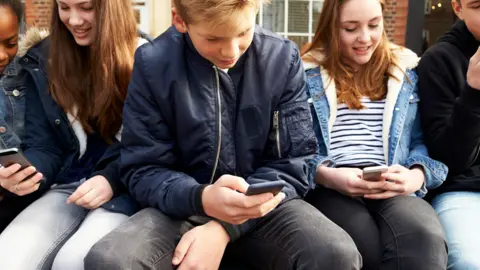
Millions of children in the UK will be forced off social media after the government announced it would ban under-16s from accessing a range of platforms.
Prime Minister Sir Keir Starmer said apps including TikTok, Snapchat and Instagram will become inaccessible for children,
“We hope to pass regulation before Christmas,” he said, with the ban coming into force in spring 2027.
Tech companies including Meta, Snapchat and YouTube warned a blanket ban would move children into more unsafe online environments
“I am not prepared to compromise on the safety and happiness of our children, and that is why this ban must happen, and why this ban will happen,” Sir Keir said.
The government is yet to release the full list of platforms affected, but said YouTube, Facebook and X would also be included.
The government said over-16s may have to verify their ages to continue using social media platforms.
But it said many adults would not need to do checks because their accounts are already over 16 years old, had a credit card linked or their email address was already verified in other ways.
Messaging apps such as WhatsApp, and Signal will not be banned, and neither will online gaming platform Roblox.
But certain features will be restricted for under-16s, such as livestreaming and strangers being able to contact children.
YouTube Kids is also exempt from the ban.
The government will also look at restrictions on some functionalities on social media, such as infinite scroll and curfews, for 16 and 17-year-olds.
Intimate and sexual chats with AI will also be banned for under-18s.
The ban follows growing pressure from campaigners to make the online world safer for young people, and is part of an international trend of governments restricting who can access social media.
“This social media ban won’t solve every problem overnight, but it is a major step forward,” said Joe Ryrie, co-founder of the Smartphone Free Childhood campaign group.
“Millions of children will now get a few more years to grow up before entering online environments that were never designed with their wellbeing in mind.”
Snapchat said it shared the objective of online safety, but disagreed with a full ban.
Meta said a ban risked “isolating teens from online communities and information, and driving them to unregulated alternatives”.
YouTube said it has many protections in place for teens, and called itself “a vital resource for young people, educators and parents”.
“Blanket bans push kids out of such curated, supervised, beneficial experiences and towards anonymous, less safe services,” its statement said.
TikTok said: “We will examine the details of the government’s measures, and we look forward to collaborating constructively with the government on this important issue.”
Speaking in the House of Commons, Technology Secretary Liz Kendall said the measures would “take power away from the tech giants, who have had countless opportunities to keep children safe”.
She said she was clear that there was still much more to do for adults as well as children on social media, and that “today’s announcement is not ‘one and done’ or the end of the story”.
The ban was generally welcomed by a group of bereaved parents who say their children died as a result of a variety of harms on social media.
“I’m so glad now that this announcement has been made”, Esther Ghey told BBC Breakfast.
Her daughter Brianna was killed by two teenagers in 2023. One of the killers said she had become interested in “dark materials” online, including videos of murder and torture.
Ghey said the ban can “potentially save so many children’s lives”, but added there needed to be support in place for children who will not be able to access social media.