



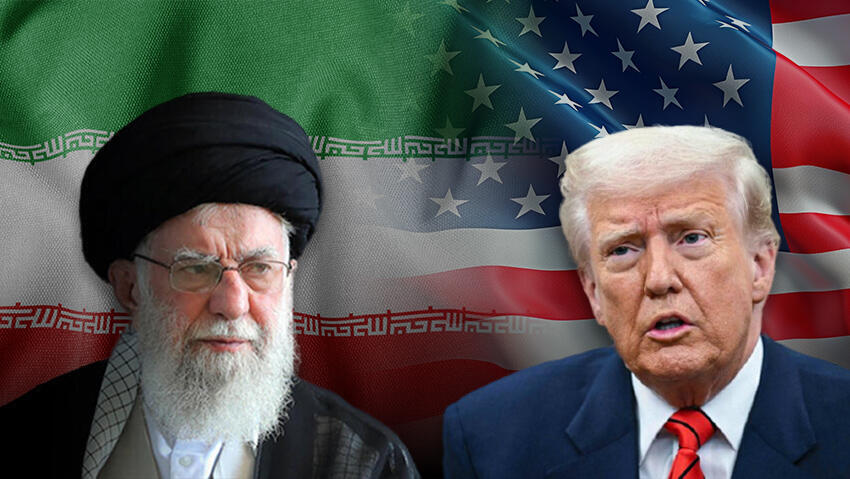
As the United States continues a significant military buildup in the Middle East, Iran has taken steps to signal its readiness for war, including fortifying its nuclear sites and rebuilding missile production facilities.
Iranian and US negotiators held indirect talks in Geneva for three-and-a-half hours on Tuesday, but it ended with no clear resolution. Iran’s top diplomat Abbas Araghchi said both sides agreed on a set of “guiding principles,” but US Vice President JD Vance said the Iranians had not acknowledged “red lines” set by US President Donald Trump.
Despite ongoing talks, the White House has been briefed that the US military could be ready for an attack by the weekend, after a buildup in recent days of air and naval assets in the Middle East, sources familiar with the matter told CNN.
Amid the threat of war, Iran has spent recent months repairing key missile facilities and heavily damaged air bases while further concealing its nuclear program. It has appointed war veterans to its national security structures, conducted maritime wargames in the Persian Gulf and launched an intense crackdown on domestic dissent.
In June last year, Israel launched a surprise attack on Iran that destroyed parts of its nuclear program, severely damaged missile production sites and killed key military commanders. Over the ensuing 12-day conflict, Iran retaliated by launching hundreds of missiles and drones at Israeli cities, while the US struck three Iranian nuclear sites – with US President Donald Trump claiming they had been “totally obliterated.”
Western nations have consistently failed to persuade Iran to curb its missile program, which Tehran regards as a central pillar of its military strength and a right to its self-defense.
Despite suffering heavy losses in the war with Israel, satellite imagery analysis reveals that Iran has rebuilt damaged missile facilities.
Satellite imagery of the Imam Ali Missile Base in Khorramabad, captured on January 5, shows that of the dozen structures destroyed by Israel, three have been rebuilt, one has been repaired while three others are currently under construction. The facility houses silo launch sites critical for firing ballistic missiles with earthwork and construction around them.
Two other military bases have also undergone extensive repairs. At the northwestern Tabriz air base linked to Iran’s medium-range ballistic missiles, taxiways and runways have been restored. In another a missile base in the north of the city, extensive work has been conducted after the war. All the entrances were reopened after being bombed shut, the support area by the entrance was mostly rebuilt and some tunnels are now open, according to a CNN analysis and Sam Lair, a research associate at the James Martin Center for Non-proliferation Studies (CNS).
At Hamadan Airbase in western Iran, craters created by bombs on the runway have been filled and aircraft shelters repaired, according to a CNN analysis and Lair.
Iran has also swiftly rebuilt its largest and newest solid-propellant missile production facility in Shahrud, a technology that allows for the rapid deployment of longer-range missiles.
“I think the most important site is Shahrud. The damage there was repaired very quickly,” Lair said. “There was also a new production line under construction there during the war which was not damaged and is now likely operational, which means counterintuitively solid propellant missile motor production might be greater now than before the war, at least at that site.”
CNN