


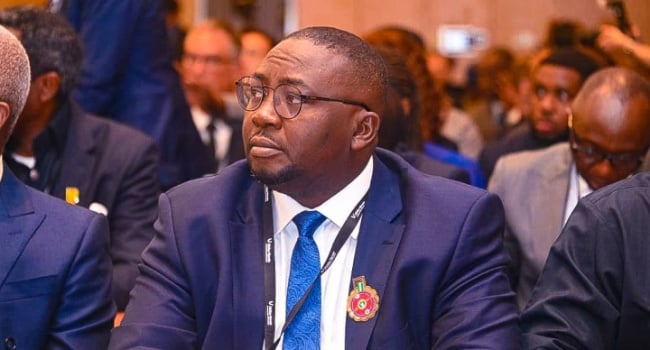
Minister of Power ,Bayo Adelabu, has trumped up the gains of the power sector reforms, noting that more than $2 billion fresh investments have been attracted into the industry.
Adelabu disclosed this in Abuja on Thursday during the commissioning of the new headquarters of the Nigeria Electricity Liability Management Company (NELMCO).
Adelabu said the reforms have attracted “over $2 billion in fresh investments into the sector, while ongoing efforts to transition the industry towards full commercialisation have significantly improved its financial outlook”.
The minister of Power said revenue in the sector went up by 70 percent in 2024, while government liabilities reduced by about N700 billion, indicating improved efficiency and stronger cost recovery.
He pointed out gains in generation capacity, which rose from 13 gigawatts to 14 gigawatts, alongside notable operational achievements, including a peak generation of 5,801.44 megawatts.
According to Adelabu, the federal government has implemented far-reaching reforms and recorded measurable gains in Nigeria’s power sector under President Bola Tinubu’s Renewed Hope agenda.
He noted that the changes are beginning to produce tangible results across the entire electricity chain
He described the ongoing transformation as a strategic effort to create a viable, investor-friendly electricity market.
A key element of the reform programme, he said, is the Electricity Act 2023, which has decentralised the sector and enabled greater participation at the subnational level.
Adelabu said this has already resulted in the establishment of 16 state electricity markets, fostering competition and encouraging innovation within the industry.
He stated that the government is tackling the long-standing metering gap through the presidential metering initiative, supported by N700 billion from the federal account allocation committee (FAAC) and an additional $500 million facility from the World Bank.
As part of the wider reforms, Adelabu said Nigeria has successfully synchronised its national grid with those of other ECOWAS countries following a four-hour uninterrupted test run.