



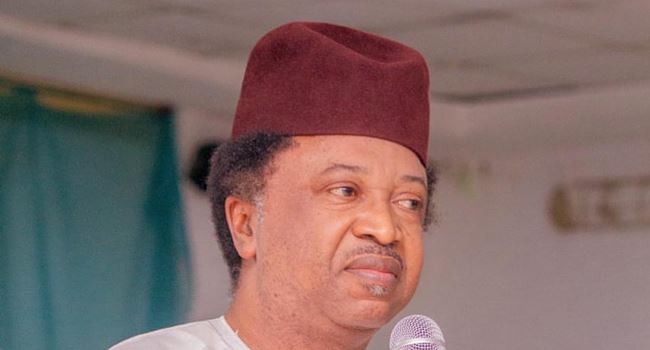
Former senator representing Kaduna Central, Shehu Sani, has stated that electronic transmission of election results will not on its own guarantee free and fair elections in Nigeria.
Sani spoke on Wednesday during an interview on Channels Television, in response to growing public outrage over the senate’s refusal to make real-time electronic transmission of results a mandatory component of the amended Electoral Act.
Protests against the senate decision had continued in Abuja on Tuesday, with both the red chamber and house of representatives recording rowdy sessions, culminating in the walkout of plenary by some lawmakers.
Weighing in on the controversy, Sani noted that while technology can enhance transparency, it cannot substitute for political will and institutional integrity.
According to him, individuals determined to manipulate the process will always attempt to exploit loopholes, regardless of the system in place.
He added that focusing solely on technological solutions risks ignoring deeper structural and ethical challenges within the electoral framework.
“If we are interested in election techniques, that does not mean that when we have electronic transfer of results there will be no manipulation. It all depends on what we want to do as a country with our electoral system,” Sani said.
He pointed to persistent voter inducement during elections as evidence that malpractice is rooted in human conduct rather than the mechanics of collation.
The former lawmaker, however, clarified that he supports electronic transmission of results but insisted that the law must provide room for manual collation where technical failures occur.
“Election takes place in one day and it is expected that results will be transmitted the same day,” he said.
”If there is no provision for an alternative, what becomes of it? Do we wait for the next day, two days, three days?”
He also cautioned against imposing standards that may prove impractical, noting that even technologically advanced countries face challenges in achieving seamless nationwide electronic transmission of results.
“I think we should do what is practical. If it is difficult for even the most advanced nations to electronically transfer all their results, why do we want to force that on ourselves to that level?” Sani asked.
“But the central point is that we say there should be electronic transfer of results and where there is a glitch or failure, we go to the manual. There should not be anything wrong with that.”