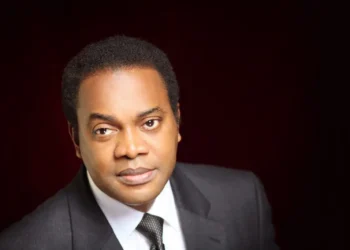




By Paul Lucky Okoku
A 2–1 win over Tanzania delivers points, but wastefulness, overconfidence, and systemic challenges expose what Nigeria must fix to truly contend.
For many Nigerians, AFCON 2025 carries emotional weight beyond silverware. After missing out on qualification for the 2026 World Cup in North America, this tournament represents atonement, reassurance, and pride Winning AFCON would not erase the pain — but it would heal it.
Nigeria began its AFCON 2025 campaign with a 2–1 victory over the Tanzania Taifa Stars — a result that delivers three points, confidence, and clarity all at once.
Final Score: Nigeria 2–1 Tanzania
Nigeria Possession: 59%
Tanzania Possession: 41%
Nigeria Goals: Semi Ajayi (36’), Ademola Lookman (52’)
Tanzania Goal: Charles M’Mombwa (52’)
Nigeria dominated large portions of the match, moved the ball well from defense into midfield, and asserted territorial control. The hunger was visible. The intent was encouraging. Yet the game also exposed a familiar concern — *wastefulness in the final third.

Dominance without precision is noise, not victory.
Possession alone does not win tournaments. Goals do. Trophies are lifted by teams that score goals and utilize every scoring opportunity*, not those that merely control the ball.
Nigeria created moments that should have produced a wider margin. Instead, inaccurate passes around the box, missed shots on target, and delayed decisions kept Tanzania alive deep into the game. Against top opposition, those moments decide fate.
This is where perspective matters.
Perspective from a Former Player
The first game of a major tournament is always deceptive.
Players arrive from different clubs, systems, and rhythms. Training time is limited. Chemistry is incomplete. The opening match is about finding balance, not perfection. Expecting five or six goals against any qualified opponent is not analysis — it is arrogance.
Tanzania qualified for AFCON on merit. They did not arrive as spectators. Expecting walkovers because of reputation reflects emotion, not football reality. Every team at AFCON carries national pride, preparation, and belief.
Every team at AFCON earned its place. Tanzania did not arrive by invitation; they qualified through the same competitive gauntlet as everyone else, including Nigeria. In modern football, there are no walkovers — only consequences for disrespect.
As a reminder to fans and observers alike:
“Overconfidence is not belief — it is the silent rehearsal of failure.”
— Paul Lucky Okoku
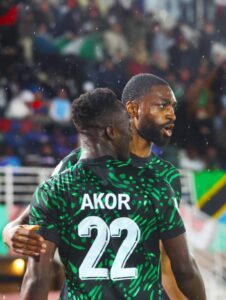 Nigeria’s quality is not in doubt, but respect for opponents remains essential. AFCON’s magic lies in its uncertainty — the same uncertainty that produces upsets and keeps the continent watching.
There was also a tactical positive worth noting. Tanzania’s strategy focused heavily on neutralizing Victor Osimhen, and in doing so, they freed space for others. That attention allowed goals to come from Semi Ajayi and Ademola Lookman — a healthy sign for a team that must never be dependent on a single scorer.
Psychologically and tactically, Osimhen’s presence stretched the defense and liberated teammates. That is elite football dynamics at work.
One thoughtful note for Victor Osimhen — whose quality, commitment, and impact are never in doubt — is about on-field leadership and body language.
At times, when a pass doesn’t arrive as expected or a teammate makes an error, visible frustration follows: expressive gestures, flicks of the hand, or reactions that draw attention to the mistake. While such moments are understandable in the heat of competition, *publicly exposing a teammate — to the crowd in the stadium and millions watching on television — can unintentionally weaken collective confidence.
Great leaders lift, even in frustration. A simple nod, a thumbs-up, or a quiet word of encouragement communicates trust: “I’ve got you. Let’s go again.” And when emotions run high, restraint can be just as powerful. There is wisdom in the old saying: if there’s nothing constructive to say in the moment, silence is often the better choice.
 A principle long established in management applies on the field as well: praise publicly, correct — or admonish — privately.
Football, at its highest level, is built on shared responsibility. Success depends not only on brilliance, but on unity — especially when things don’t go perfectly.
There is another layer many fans avoid discussing: morale.
The Unspoken Factor: Morale and Repeated Institutional Failure
Still, football does not exist in isolation from reality.
Reports of coaches being owed salaries before major tournaments continue to surface — a recurring institutional failure that quietly affects morale, unity, and focus. Players are human. Players feel it. They care about leadership. They internalize injustice. And they remember patterns.
When coaches’ wages are delayed, when bonuses are withheld, when camp allowances become annual controversies, it affects players — directly and indirectly. Players care about their coaches. They feel injustice. They remember history.
Those of us who wore the green-white-green know this reality too well — from the Flying Eagles to the Super Eagles. Administrators mistreat today’s coaches the same way players were mistreated yesterday. Then, years later, the same players are blamed for post-career hardship.
You cannot continuously destabilize a system and expect peak performance on demand.
It must be said loudly and plainly:+
This is not an excuse — it is context.
When systems fail people, performance pays the price — and despair becomes the cost.”
— Paul Lucky Okoku
The entire system of Nigeria has failed its people, and the price is not paid in money alone, but in despair — expressed through hardship, unemployment, corruption, and suppressed potential. Long before today’s headlines, Fela Anikulapo Kuti captured this contradiction in his song Suffering and Smiling, warning of a society taught to endure pain quietly: Suffer, suffer for world. Enjoy for heaven. It was not satire — it was prophecy.
 When people are conditioned to smile through suffering, whether in governance, workplaces, or football camps, excellence is delayed and performance constrained.
Nigeria has lived this story before. Until the structure changes, its shadow will continue to follow the team into major competitions.
Looking ahead, the challenge intensifies and the margin for error narrows.
Nigeria faces Tunisia national football team on Saturday, December 27, 2025 — a disciplined, experienced side with a long and complicated history against Nigeria. This match will not tolerate wastefulness or complacency.
The final group game comes against Uganda national football team on Tuesday, December 30, 2025.
For Nigeria, the path forward is clear:
score goals, respect opponents, and convert dominance into decisive outcomes.
Three points have been secured.
The warning signs have been revealed.
What comes next will define intent.
AFCON does not reward possession.
It crowns precision, discipline, and execution.
Reflections, in my own words, championing fairness, one story at a time.
— Paul Lucky Okoku
Former Nigerian Super Eagles international, AFCON 1984 Silver Medal Winner
Vice Captain, Flying Eagles of Nigeria(Class of 1983) — U21 World Cup, Mexico